FPV Video Transmitter Shopping Guide for Dummies 2026 Edition
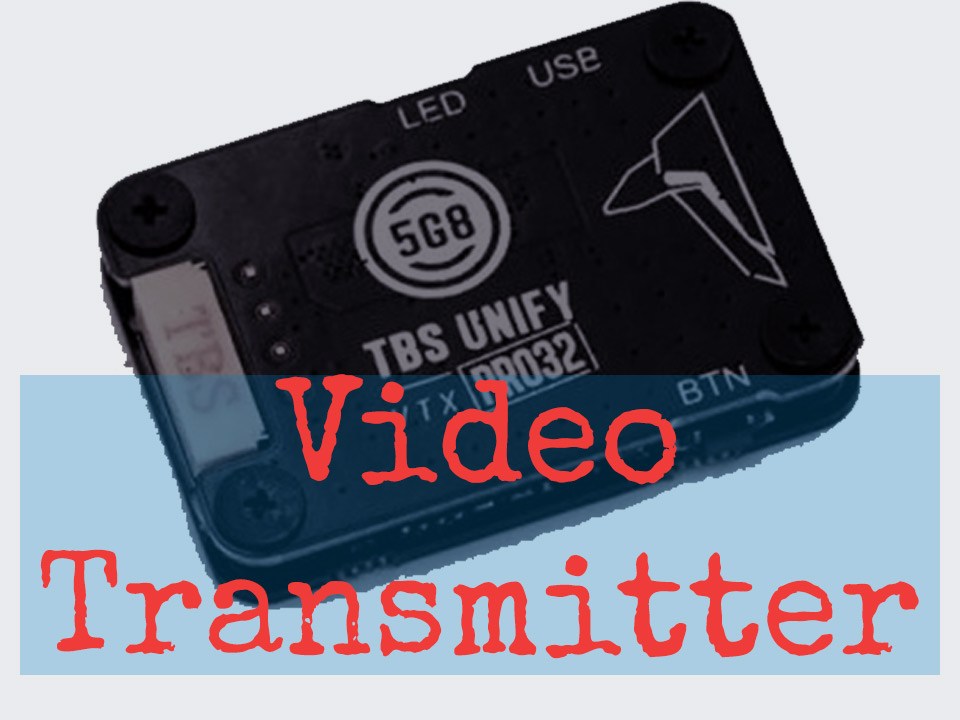
Video transmitter, or VTX, is the heartbeat of every FPV drone. It’s what separates the “actually flying” experience from watching a screen on the ground. Whether you’re just getting started or looking to upgrade, choosing the right VTX can make or break your setup.
The golden rule: get a VTX with adjustable power and plenty of channels. You need switchable power because high-power flying solo is different from group racing where low power keeps everyone happy. Look for telemetry support so you can change settings on the fly, and pit mode is essential if you’re racing—it lets you power on without blasting interference into other pilots’ video feeds.
Still mostly flying analog? That’s valid. But digital is gaining serious ground in 2025-2026, and if you’re considering a move toward higher image quality, the technology is finally getting accessible.
What Actually Is a Video Transmitter?
A VTX takes the live video from your FPV camera and broadcasts it wirelessly at 5.8 GHz (or other frequencies, depending on your region) to your FPV goggles. Without it, your drone is just a flying camera you can’t see through. It’s the magic that makes FPV, well, FPV.
Frequency, Licensing, and Playing by the Rules
Most FPV VTXs operate on the 5.8 GHz ISM (Industrial, Scientific, Medical) band. In the US and many other countries, the FCC technically requires a ham radio license to operate most VTXs. That said, enforcement is rare in casual flying, but if you’re serious about the hobby, getting your Technician license (it’s easier than you think) shows respect for the community and the spectrum.
The good news: FCC-certified VTXs exist, but options are still limited. Most pilots fly without certification, so just know the legal landscape in your area before you buy.
VTX Channels and Bands: Why They Matter
A VTX can operate on different frequencies, organized into bands: A, B, E, F (FatShark), and R (Raceband). Each band has 8 channels, and each channel is a specific frequency.
| Band | CH1 | CH2 | CH3 | CH4 | CH5 | CH6 | CH7 | CH8 |
|---|---|---|---|---|---|---|---|---|
| A | 5865 | 5845 | 5825 | 5805 | 5785 | 5765 | 5745 | 5725 |
| B | 5733 | 5752 | 5771 | 5790 | 5809 | 5828 | 5847 | 5866 |
| E | 5705 | 5685 | 5665 | 5885 | 5905 | — | — | — |
| F | 5740 | 5760 | 5780 | 5800 | 5820 | 5840 | 5860 | 5880 |
| R | 5658 | 5695 | 5732 | 5769 | 5806 | 5843 | 5880 | 5917 |
The reason you care about channels: when multiple pilots fly together, you need to avoid using the same channel to prevent signal interference. More bands and channels on your VTX mean more flexibility when you’re flying in groups. Most affordable VTXs now support 40+ channels, which is the sweet spot for group flying. Some newer models go up to 72-80 channels for even more options.
Pro tip: match your channel selection to where you’ll be flying. If you’re in a competitive racing scene, check what channels the local events use.
Power Output: More Isn’t Always Better
VTX power ranges from 25 mW (milliwatts) all the way up to 2.5W (2500 mW) on high-end long-range builds. Here’s the catch: power doesn’t scale linearly with range. A 50 mW VTX isn’t twice as good as 25 mW because a lot of that power gets converted to heat, not useful transmission.
Also, high power in crowded spaces causes problems. When you’re flying near other pilots, your 600 mW signal can “bleed” into their video feed, making it unwatchable. That’s why group racing almost always runs at 25 mW. High power is only useful when you’re flying solo over distance or in wide-open areas.
Practical power levels:
- 25 mW: Perfect for racing, micro drones, and group flying.
- 100–200 mW: Good middle ground for casual outdoor flying.
- 500 mW–1.6W: Better penetration for freestyle and moderately long-range flights.
- 2–2.5W: Maximum power for serious long-range flights in open terrain.
If you’re building your first few drones, go with a VTX that has switchable power from 25–200 mW minimum. That flexibility will save you headaches.
Pit Mode: The Racer’s Best Friend
Pit mode is a low-power standby mode (usually under 0.1 mW) that lets you power up your VTX without broadcasting interference. You use it when your quad crashes during a race or when you’re switching channels in the pits—you can test your drone without disrupting other pilots in the air. If you plan to race, pit mode is non-negotiable.
VTX Control and Telemetry: Change Settings Without Opening Your Drone
Older VTXs forced you to use physical DIP switches or buttons buried inside your frame to change channels. If you had 40 channels and needed to switch from channel 1 to channel 31, you’d press a button 30 times. Painful.
Modern VTXs use telemetry protocols like Smart Audio or Tramp, which let you change power and channels through your Betaflight OSD menu or even through your radio. This is standard now—don’t buy a VTX without it unless you enjoy the pain of DIP switches.

Analog vs. Digital VTX: The Format War
Analog VTXs use NTSC or PAL video formats. They’re cheap, lightweight, and proven. Digital systems (DJI, Walksnail, HDZero) transmit HD video instead of standard definition.
| Features | Digital | Analog |
|---|---|---|
| Price | $75–$300+ | $20–$100 |
| Weight | 15–45g | 2–15g |
| Video Quality | 720p–4K | 480p (NTSC/PAL) |
| Latency (typical) | 15–22ms | 0–5ms |
| System Lock-In | High (requires compatible camera, goggles) | Low (plug most cameras/receivers together) |
| Signal Degradation | Reduced resolution at low signal; eventually cuts out | Noise/static until it dies |
The reality in 2026: analog still dominates racing for a reason—it’s light, it works, and it’s cheap. But digital is taking over freestyle and cinematic flying. If you’re on a 3″ or smaller whoop, every gram matters, so analog often wins. If you’re building a 5″ freestyle machine and want stunning footage, digital is worth the extra weight.
There are three main digital systems: DJI (most refined, most expensive), Walksnail (mid-range, good compatibility), and HDZero (lightweight racing-focused alternative).
Other Specs That Matter
Voltage Input: Most analog VTXs run 5V or 7-36V. Digital systems vary—check before you buy. Running the wrong voltage will fry your VTX instantly.
Antenna Connector: U.FL (used on small builds) is fragile but light. RP-SMA (larger drones) is durable but heavier. SMA and MMCX are in between. Make sure your VTX and antenna match.
Built-in Microphone: Some VTXs capture motor and wind sound. You’ll either love it for immersion or hate it for the noise. It’s a nice-to-have, not essential.
Power Output for Other Components: Some VTXs include a 5V output to power your camera or other gear. Saves a power wire, but make sure the current draw doesn’t exceed the VTX’s BEC capacity.
Best Video Transmitters for 2026
Analog VTX: Racing and Freestyle
Budget Pick: HGLRC Zeus Nano
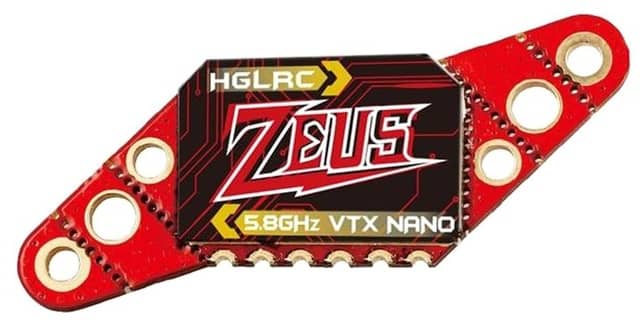
The HGLRC Zeus Nano is the everyman’s VTX. It weighs just 2.4g, supports 40 channels across all major bands, and outputs up to 350 mW. Smart Audio telemetry, pit mode, and a built-in microphone round out the feature set. At roughly $25–35, it’s the go-to choice for pilots building multiple drones who don’t want to break the bank. Works with any 5V BEC.
Pros: Insanely cheap, lightweight, full feature set for the price, multiple mounting patterns (16×16, 20×20, 25.5×25.5).
Cons: 5V only (need a regulator if running higher voltage), not the cleanest signal if you’re flying with many other pilots.
Premium Analog (Compact): TBS Unify Pro32 Nano
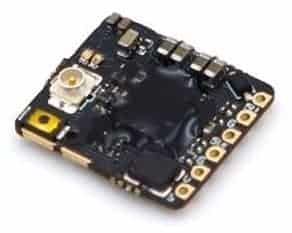
The Unify Nano is the gold standard for micro quads and whoops. At 1 gram and just 15×13×2mm, it’s the smallest viable racing VTX on the market. It punches well above its weight—up to 500 mW output, Smart Audio V2.1, pit mode, and support for all standard bands and channels. If you’re building something tiny, this is the one.
Pros: Lightest on the market, exceptional signal cleanliness (supports up to 16 pilots simultaneously), proven reliability, SmartAudio works perfectly with TBS Crossfire systems.
Cons: 3-13V input only (no direct battery), tiny form factor means tight soldering, not the cheapest option at its price range.
Versatile Mid-Range: TBS Unify Pro32 HV
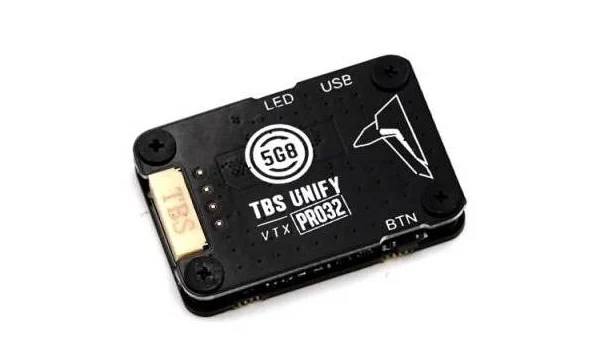
If you want the cleanest analog signal available and don’t mind the extra weight, the Unify Pro32 HV is rock-solid. Up to 1000 mW, 6-25V input, beautiful signal quality, pit mode, and all the Smart Audio features. 8.7g and 37×25×5.8mm. It works equally well for racing, freestyle, and casual flying.
Pros: Legendary reliability and signal quality, 1000 mW output, versatile voltage range, great build quality.
Cons: Heavier than alternatives (8.7g), more expensive (~$60), overkill if you only fly micro builds.
Digital VTX: Freestyle, Cinematic, and Next-Gen Racing
Best All-Around Digital: DJI O4 Air Unit
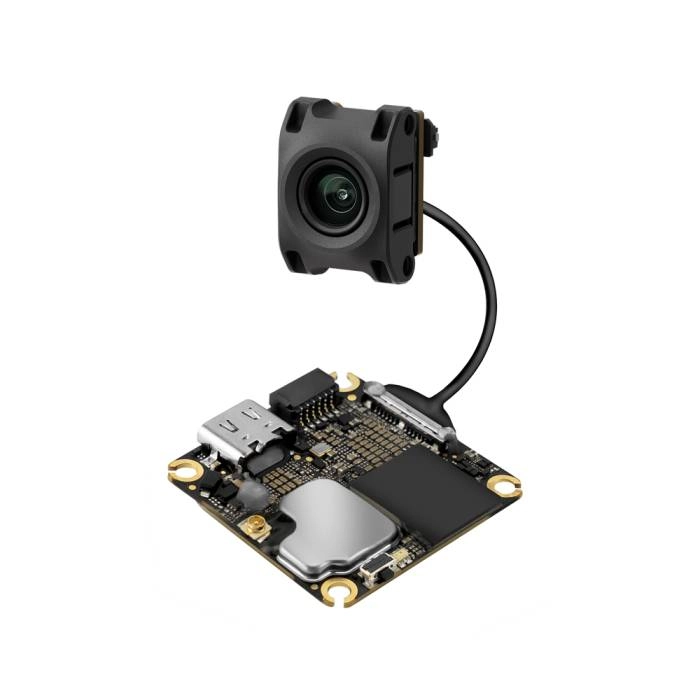
DJI just released the O4 Air Unit in 2025, and it’s the gold standard for digital FPV. The standard model weighs 8.2g and captures 4K/60fps with a 1/2-inch sensor. The O4 Air Unit Pro pushes it further with a 1/1.3-inch sensor for 4K/120fps. Both offer 15km range, 15ms latency in Racing Mode, and onboard 4K recording (no separate GoPro needed). Auto-frequency selection avoids interference.
Cons: Expensive (~$120 standard, ~$210 Pro), large camera module doesn’t fit all frames, higher power consumption and heat generation than older O3, DJI ecosystem lock-in (requires DJI Goggles 2, Goggles 3, or Integra).
The O3 is still available from some retailers but is being phased out. If you can get an O3 cheaper, it’s still excellent—just missing the O4’s Race Mode and improved sensor.
Best Budget Digital: Walksnail Avatar HD V2 Kit
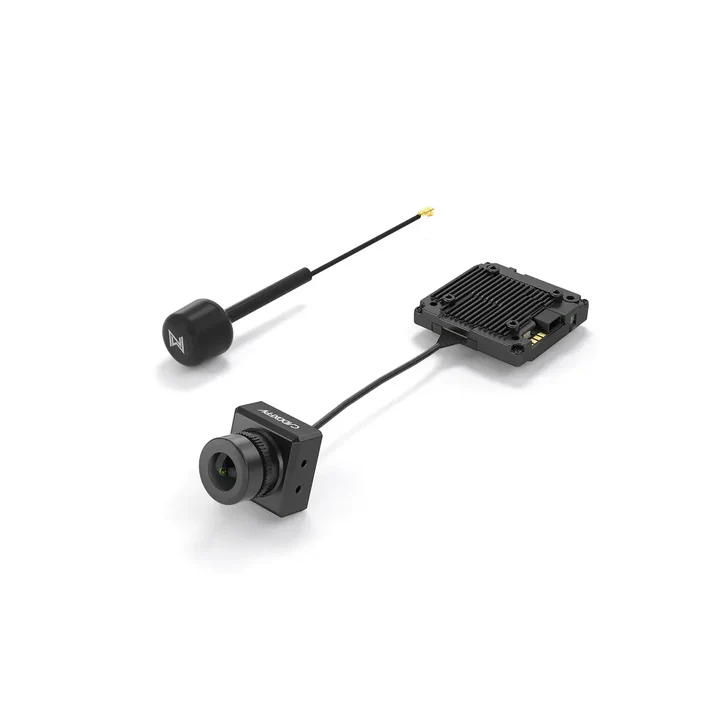
Walksnail is the alternative to DJI. The Avatar HD V2 VTX pairs with the Pro or Standard camera to deliver 1080p/60fps at 22ms latency, with up to 4km range and 1200 mW output. The V2 upgraded the original with 32GB onboard recording (8GB option still available), grounded heatsink, and better durability. Works with standard HDMI goggles or Walksnail Goggles L.
Pros: Cheaper than DJI O4 (~$170 kit), backward compatible with Walksnail V1 goggles, flexible camera options (Standard for general use, Pro for low-light), Gyroflow stabilization support (32GB version), excellent night vision with the Pro camera.
Cons: Single antenna design (less range penetration than dual-antenna systems), no 4K recording, no SD card slot for storage expansion, slightly heavier than HDZero alternatives.
Best Digital for Racing: HDZero Race V3
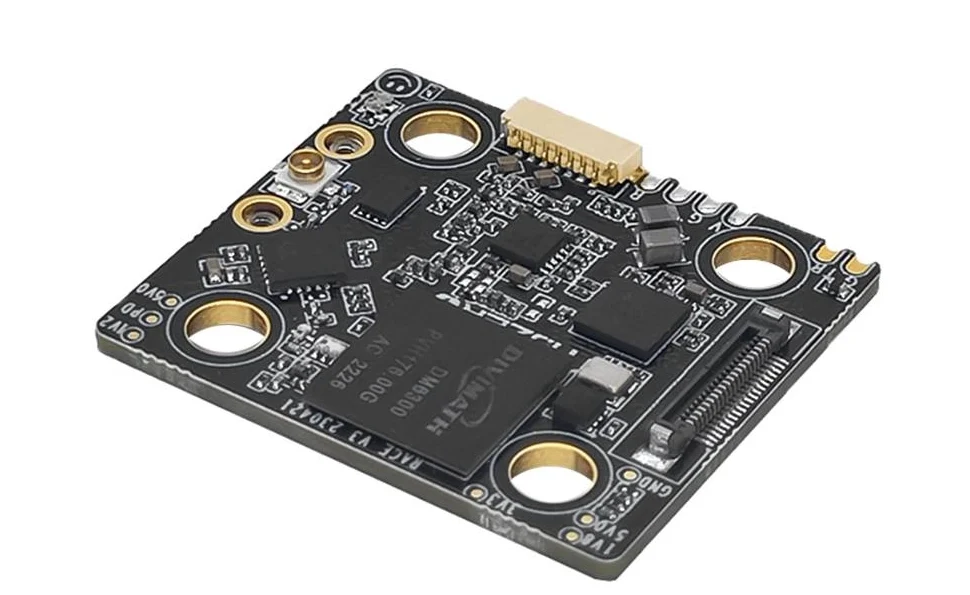
HDZero is the racing pilot’s pick for digital. The Race V3 (latest generation) is ultra-lightweight at 5.5g, supports 540p90, 720p60, or 1080p30 resolutions with switchable 25-200mW power. 4-12V input, U.FL antenna, and super-low latency make it perfect for tiny whoops to 5″ racing drones. It won’t match DJI’s image quality, but the latency and form factor are unbeatable for racing.
Pros: Lightest digital option, genuinely ultra-low latency, tiny form factor, durable (thicker PCB than V2), now includes DJI plug connector for easy FC integration, wider voltage range (down to 4V).
Cons: Needs HDZero camera and goggles/VRX module (separate ecosystem), smaller image resolution than DJI/Walksnail, 200mW max power (adequate for racing but not long-range).
Most Versatile Digital: HDZero Freestyle V2
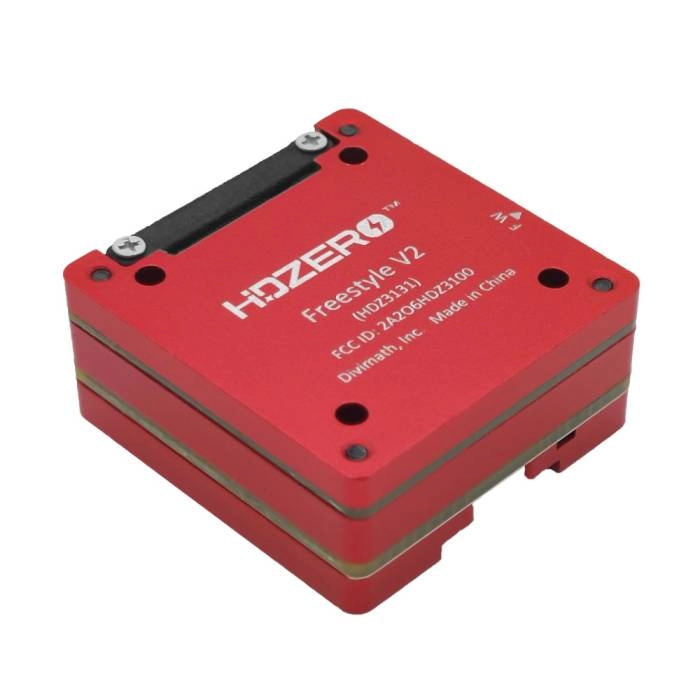
If you want long-range digital flying, the HDZero Freestyle V2 is your answer. It supports up to 1W output power (twice the Race V3), has massive heatsinks on both sides, and works with any HDZero camera. Still compact at around 40×40mm. Requires 2-4S input with an included regulator.
Pros: 1W power output, excellent range and penetration, good low-light performance, durable design.
Cons: Significantly heavier than Race V3, larger form factor, still needs HDZero-compatible cameras and goggles.
Quick Reference: Which VTX Should You Actually Buy?
| Flying Style | Best Choice | Why | Approx. Price |
|---|---|---|---|
| First-time builder (micro) | HGLRC Zeus Nano | Cheap, complete feature set, hard to screw up | $25–35 |
| Racing (5 inch) | TBS Unify Pro32 Nano or HDZero Race V3 | Analog for price, digital for image clarity | $50–100 |
| Freestyle (5–7 inch) | TBS Unify Pro32 HV or Walksnail Avatar V2 | Solid analog range or HD digital image | $70–170 |
| Long-range flying | HDZero Freestyle V2 | Maximum power, good antennas essential | $120-140 |
| Cinematic/professional | DJI O4 Air Unit | Best image quality, onboard 4K recording | $120–300 |
Final Words
The VTX you choose defines your entire FPV experience. Pick one with adjustable power, plenty of channels, telemetry control, and pit mode if you’re racing. If you’re on a tight budget, analog wins every time—the HGLRC Zeus Nano is proof that great performance doesn’t require a premium price. If image quality matters more than weight, the digital systems in 2026 have finally matured enough to be genuinely worth the cost.
Whatever you choose, make sure it fits your frame, matches your power system’s voltage, and works with the goggles you already have. One more thing: get a good antenna. A $50 VTX with a $2 antenna is a waste of money. Spend a bit more on a quality antenna, and you’ll wonder why you didn’t do it sooner.
Happy flying. Now go build something and stop second-guessing your VTX choice.