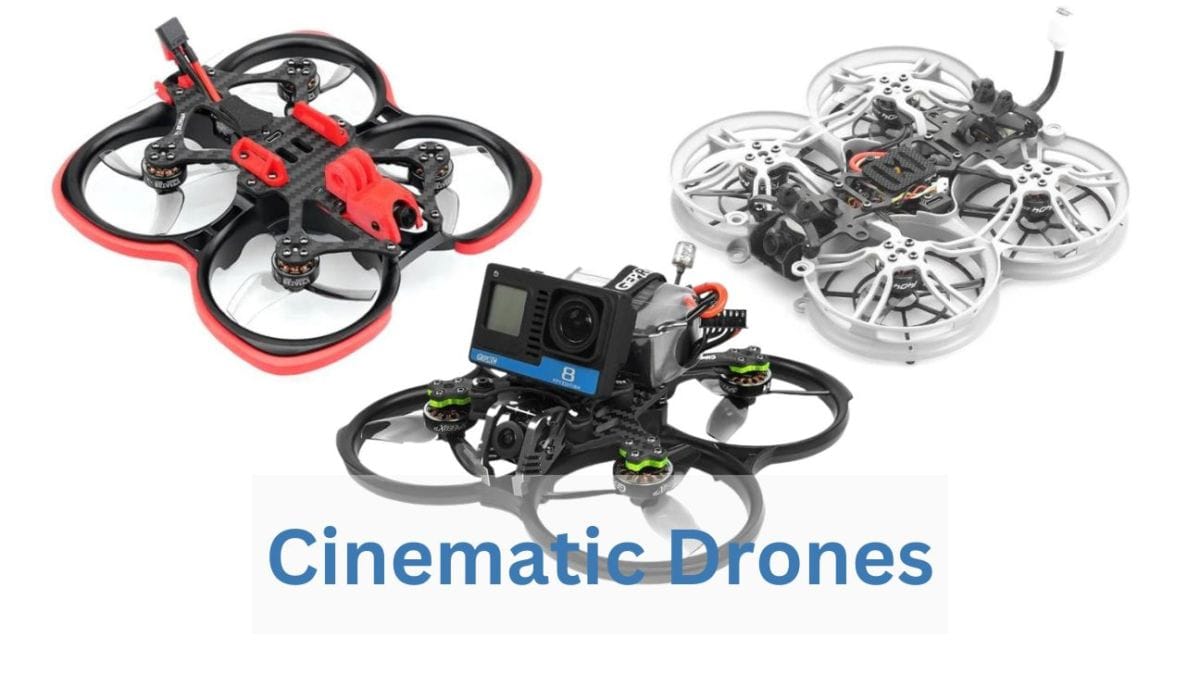
Best Cinewhoops for 2026: Your Guide to Smooth, Cinematic Drones
If you want to capture smooth, professional aerial footage without breaking the bank or crashing into people, a cinewhoop is your answer. These ducted, palm-sized quadcopters have evolved significantly since 2023—faster, lighter, and smarter. Whether you’re filming real estate, creating cinematic content, or just want silky-smooth indoor flying, there’s a cinewhoop that fits your needs and budget.
The biggest change in 2026? The shift to DJI’s O4 Air Unit Pro and modular designs. Most flagship cinewhoops now come in versions that let you upgrade your camera system without buying a whole new drone. We’ve tested the market, verified what’s actually available right now, and compiled the best picks across every category.
Unlike many guides out there, we won’t recommend last year’s models or products you can’t actually buy. Every cinewhoop on this list is available in January 2026 from reputable retailers. And yes, you’ll still need to buy an action camera separately—we’ll tell you why at the end.
Let’s dive into the best cinewhoops for 2026.
GEPRC Cinelog30 V3 – Best Professional Cinewhoop
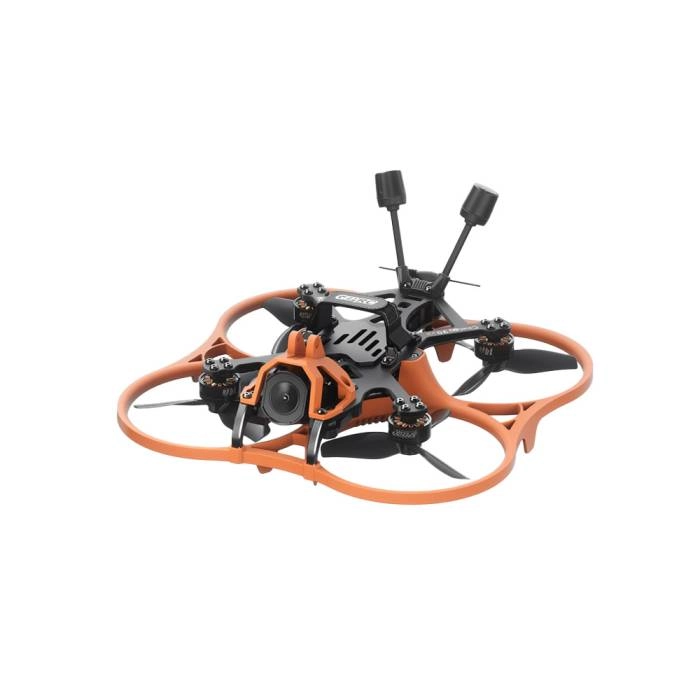
The Cinelog30 V3 is arguably the best cinewhoop on the market right now for pure cinematic work. It’s not built for aggressive freestyle or bashing—this is a tool for filmmakers, real estate agents, and commercial productions that demand flawless, jello-free footage.
What makes it special: The 30mm props and F722 45A flight controller deliver incredibly smooth, stable flight. It can cruise at glacial speeds and still hold rock-solid position. The aluminum-reinforced frame with wrap-around electronics protection means your gear is shielded from bumps. The underslung gimbal mount for the DJI O4 Air Unit Pro produces buttery-smooth, professional-grade video even when flying fast.
Flight time hits a solid 8 minutes and 10 seconds at slow, cinematic cruising speeds. At higher speeds, expect 5–6 minutes. The dust-proof plugs and protective canopy are genuine quality-of-life features—you’re not constantly fighting debris or impact damage.
The catch: At 187 grams (TBS NanoRX version), it will exceed 250g takeoff weight with most batteries. The prop guards are relatively delicate for frequent bashing. This isn’t a beginner’s learner drone; it’s a purpose-built tool.
GEPRC Cinebot25 V2 – Best Innovation in 2026
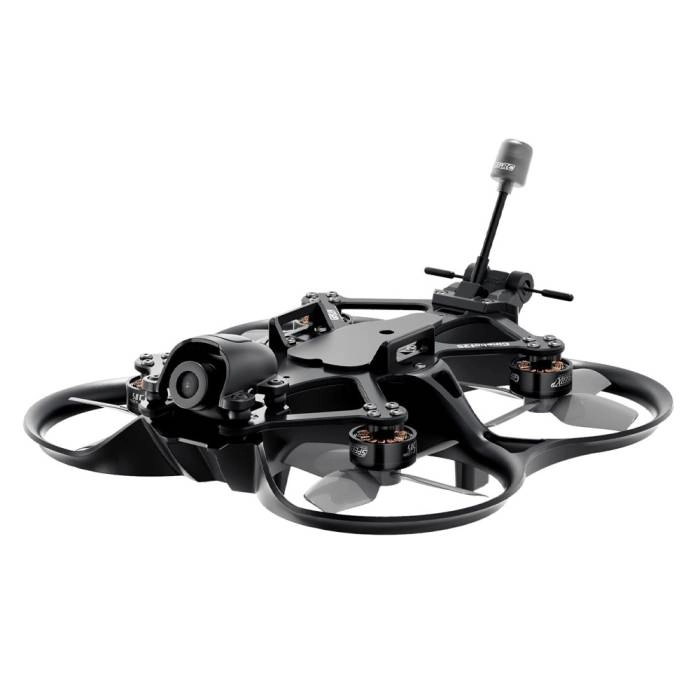
GEPRC just dropped this in January 2026, and it’s a game-changer for anyone who flies multiple drones or wants future-proof flexibility. The Cinebot25 V2 introduces a modular, quick-release camera module that holds the entire DJI O4 Air Unit Pro with vibration dampening. You can pop it off and mount it on other 2.5-inch frames GEPRC is planning for 2026.
The smart part: If you own multiple cinewhoops, you’re no longer locked into buying a complete VTX and camera system for each one. Buy one O4 module, use it across platforms. That’s a huge cost saver for pilots with gear collections.
Flight performance: The Cinebot25 V2 uses 25mm props on a 2.5-inch frame with 1404 4600KV motors. It’s more agile than the Cinelog30 but still optimized for smooth, stable flight. Flight time sits around 5–8 minutes depending on your flying style and battery.
The reality: It’s heavier than the original Cinebot25 (219g ELRS version) due to the GPS and extra electronics, so count on exceeding 250g. Some pilots report it needs tuning out of the box if you’re coming from other GEPRC models. Worth it if modularity appeals to you; less essential if you’re flying just one drone.
BetaFPV Pavo20 Pro II – Best Lightweight Hybrid
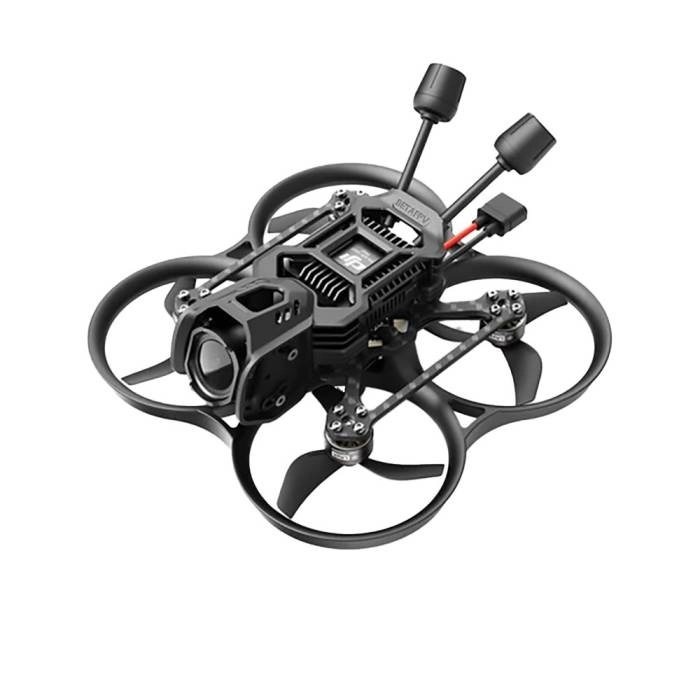
The Pavo20 Pro II is the go-to if you want the smallest cinewhoop that still carries a proper DJI O4 Pro camera and can handle a bit of freestyle excitement alongside cinematic flying. At under 150g without the battery, it’s genuinely light.
What you get: A 2.2-inch frame with 1104 7200KV motors and the new F4 2-3S 20A AIO flight controller optimized for HD digital VTX. The injection-molded HD VTX bracket is clean, durable, and includes mounting holes for both O3 and O4 Pro systems. BetaFPV designed it so existing Pavo20 Pro owners can upgrade by buying just the O4 bracket—you don’t need a whole new drone.
Flight times reach 6 minutes 40 seconds with a 3S 550mAh battery. The rubber dampers eliminate vibration and jitter, so your footage stays smooth even during fast maneuvers. The LAVA motors are reliable and provide good thrust authority for both tight indoor flying and outdoor cinematic work.
Trade-off: The tiny 3S battery means lower power than 4S cinewhoops, and you’ll be swapping batteries more often. The frame is more playful than professional—good for pilots who want options, not ideal for someone who needs pure stability.
BetaFPV Pavo Pico II – Best Micro Cinewhoop
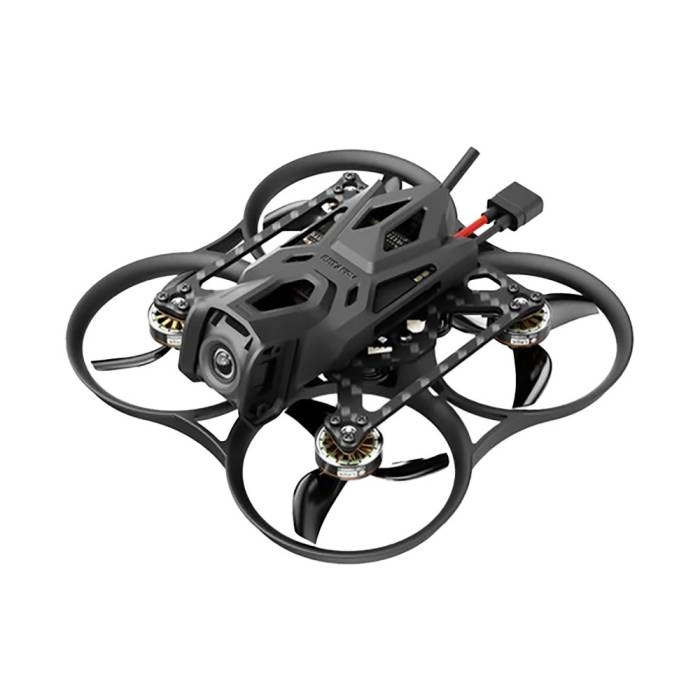
If you fly indoors a lot or need to fit through tight spaces, the Pavo Pico II is the most capable micro cinewhoop available. At just 80mm wheelbase and 53.7 grams bare weight, it’s tiny—but it doesn’t feel underpowered.
The upgrade path: BetaFPV redesigned this from the ground up for the DJI O4 system. New LAVA 1102 14000KV motors deliver 10% more thrust than the original. The O4 Bracket II includes four shock absorbers to eliminate jello in footage. The new carbon plate fits both O4 and O4 Pro, so you can upgrade between the two without changing frames.
You’ll get around 6 minutes 30 seconds of flight time with a 2S 550mAh battery in calm conditions. It’s light enough that wind won’t push it around too much indoors, but it’s still responsive and fun to fly.
The limitation: This is a 2S platform. You’re limited to smaller, lighter action cameras. The Pico II itself is fragile—great for careful pilots, a nightmare for crashers. Stock tuning favors smooth cinematic flight over aggressive control response.
SpeedyBee Bee25 HD – Best Affordable 2.5″ Option
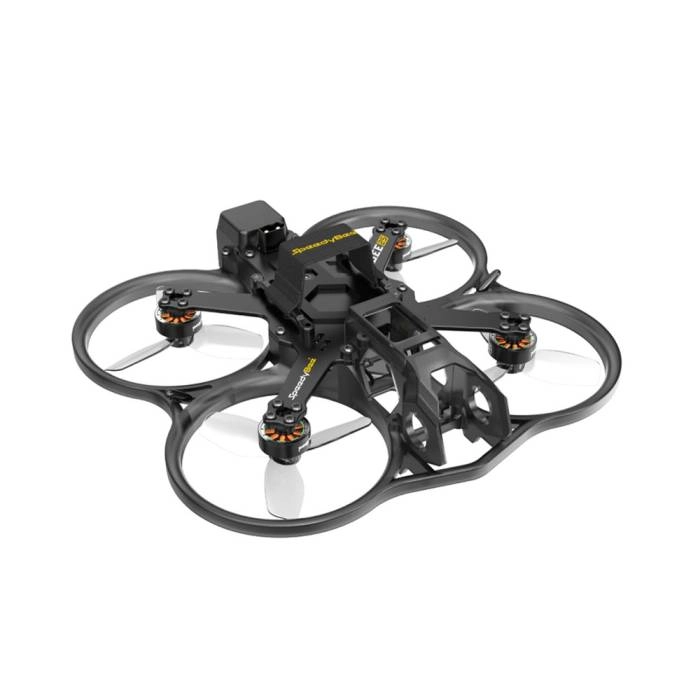
The SpeedyBee Bee25 has been around a few years, but the HD version still delivers excellent value. It’s a 2.5-inch frame that’s affordable, durable, and works well with DJI O3 systems (and can be upgraded to O4 with mounting adapters).
Why it works: The STM32F405 flight controller and 35A ESC are battle-tested. The 1404-V2 4600KV motors have good authority and efficiency. At 120mm wheelbase and 124g, it fits nicely between compact 2-inch and larger 3-inch cinewhoops. The Meteor LED system is a nice touch—customizable RGB lighting if you want it.
Flight time with a 4S 850mAh battery sits around 6–7 minutes depending on flying style. The frame is modular; arms pop out for easy repair after crashes.
The honest part: The prop guards aren’t as durable as the GEPRC or Diatone models. It’s more of a “reliable daily flyer” than a premium cinema tool. The stock tuning leans toward smooth but not cinematically polished. Some pilots need to fine-tune PID values out of the box.
FlyWoo FlyLens 75/85 HD – Best Compact Alternative
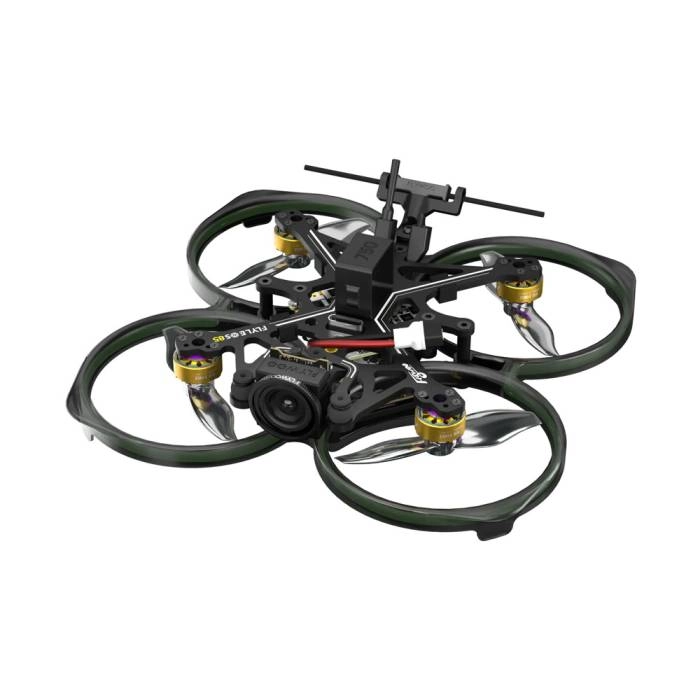
If you want something off the beaten path, FlyWoo’s FlyLens series deserves attention. The 75mm (FlyLens 75) and 85mm (FlyLens 85) options come in multiple camera system flavors, including DJI O4 Pro variants.
Standout features: Three-point CNC damping platform for ultra-smooth video. Reverse-thrust motor design reduces noise and extends flight time. Sub-250g options available, especially with the O3 Lite version. Quick-release battery compartment and frame for easy maintenance.
Flight times range from 6–8 minutes depending on battery size and your flying style. The compact design and damping system make it excellent for cinematic flying without jello.
The catch: FlyWoo has less brand presence in North America than GEPRC or BetaFPV. Finding parts or support takes more effort. Availability can be spotty depending on which FPV system variant you want.

What Are Cinewhoops, and Why Fly One?
Cinewhoops are small FPV drones designed to carry an action camera and capture smooth, professional-looking aerial footage. The defining feature is the ducted propellers (prop guards)—they let you fly safely near people, objects, and obstacles without cutting anyone or anything.
Because of their size and prop guards, cinewhoops can operate indoors, in confined spaces, and during commercial shoots where open-prop freestyle drones aren’t permitted. They’re also significantly cheaper than larger platforms, which makes them accessible for beginners and professionals alike.
Advantages of Cinewhoops
- Smooth, stable flight – Designed for cinematic lines, not tricks. You can hover and cruise at low speeds without drift.
- Safe operation – Prop guards protect people and objects. Accepted on commercial film sets and in regulated airspace.
- Indoor flying – Small enough for large warehouses, buildings, and tight outdoor spaces.
- Affordable – Cheaper than 5-inch freestyle drones and significantly less expensive than commercial camera drones like Freefly or DJI cinema platforms.
- Lightweight – Many stay under 250g, reducing regulatory burden in many countries.
- Fun to learn on – Forgiving flight characteristics make them great for transitioning DJI Avata or Cine4K pilots into FPV.
Disadvantages of Cinewhoops
- Short flight time – Action camera weight adds up. Expect 5–8 minutes per battery, not 20–30 minutes.
- Limited power – You can’t do aggressive aerobatic tricks. Cinewhoops are built for smooth, controlled flight.
- Fragile prop guards – Repeated crashes can damage the ducts. Repair can be expensive depending on the model.
- Action camera required – The onboard VTX camera is for pilot video, not recording. You must add a GoPro, DJI Action, or similar—an extra cost.
- Thermal sensitivity – Enclosed electronics and small props generate heat. Flying in hot conditions or high-speed runs can cause overheating.
Do You Need an Action Camera?
Yes, you do. Cinewhoops come with a small analog camera (for pilot FPV) or a digital camera system like DJI O4 Air Unit Pro. Neither is suitable for recording cinematic footage. The analog cameras are low-resolution and noisy. Even digital systems prioritize live transmission over recording quality.
You’ll want to mount a dedicated action camera on top. Popular choices include:
- DJI Osmo Action 4 or Action 5 Pro – Excellent low-light performance, 1/1.3-inch sensor, color accuracy, built-in stabilization. Industry-standard for FPV cinematography.
- GoPro Hero 12 or Hero 13 – Proven performance, lots of accessories, excellent stabilization (HyperSmooth). Heavier than the Action, prone to overheating in tight spaces.
- Naked GoPro + gimbal – Some pilots mount a lightweight action camera directly with rubberized mounts for vibration isolation. Works, but requires more tuning.
The action camera adds 50–150g depending on model. This pushes most cinewhoops over the 250g threshold, so check your local regulations. A smaller camera like the DJI Action (52g) is ideal for staying light. A full-size GoPro Hero will make your cinewhoop sluggish and heavy.
Final Thoughts
The cinewhoop market in 2026 is stronger than ever. You’ve got real options at every price point: professional-grade machines like the Cinelog30 V3 for serious work, innovative new releases like the Cinebot25 V2 for modular flexibility, and solid budget picks like the SpeedyBee Bee25 for pilots who just want to fly and have fun.
Start with the category that matches your budget and purpose. If you’re a filmmaker or real estate photographer, invest in a Cinelog30 V3. If you want versatility and lower cost, the Pavo20 Pro II or Cinebot25 V2 are excellent choices. Flying indoors? Pavo Pico II. Need affordability? Bee25.
And remember—the drone is only half the equation. Budget for a quality action camera, extra batteries, and some practice time. Smooth cinematic footage comes from good equipment and good flying.
Happy flying.