Best FPV Goggles for 2026: Analog, Digital & Budget Options
FPV goggles are the most crucial—and yes, expensive—piece of gear you’ll buy. They’re literally what sits between your brain and the sky. With so many options flooding the market, it’s overwhelming for new pilots to know what’s actually worth the money.
Here’s the thing: you can spend $200 on goggles or $750. The difference isn’t just pixels on a screen—it’s the whole experience. Whether you’re flying trash-tier analog for fun or pushing limits with premium digital, the right goggles make all the difference.
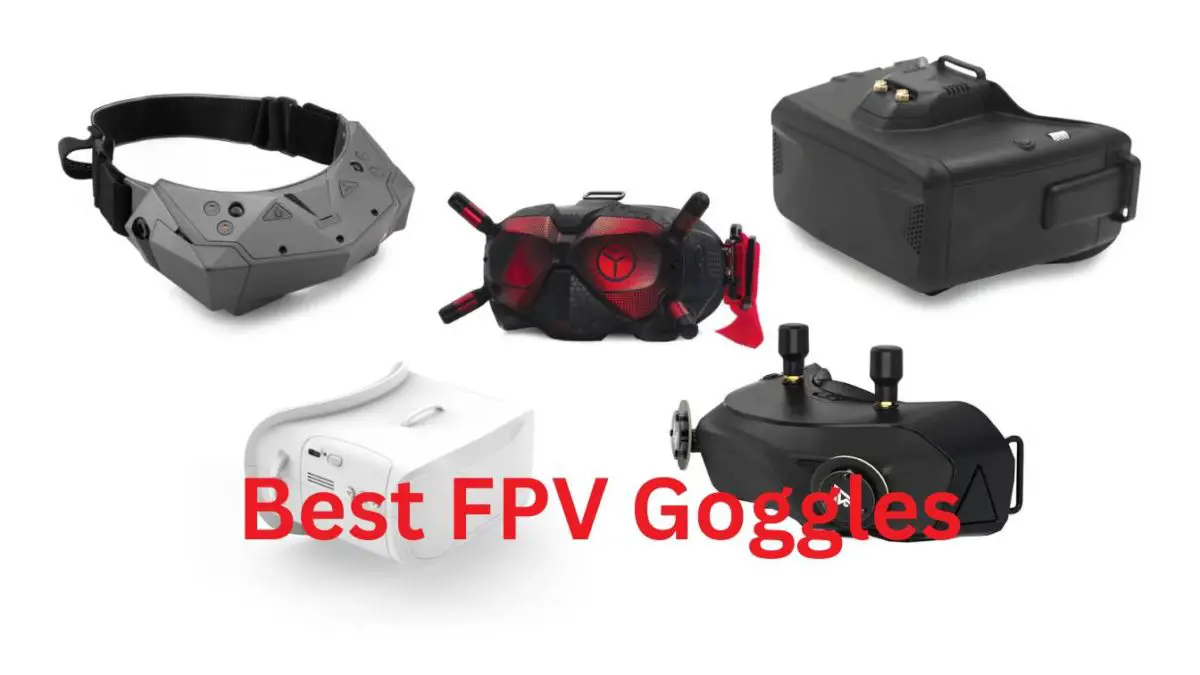
To save your time and sanity, I’ve compiled the best FPV goggles across every budget and style for 2026. I’ve tested these recommendations, checked them against what real pilots are flying, and included affiliate links where available. If you grab something through my links, I get a tiny commission that helps keep this site running.
Let’s break this down by what matters: your budget, your flying style, and what you actually want to see when you’re in the air.
The FPV Goggles Decision: Analog vs. Digital
First thing to understand: there are two completely different worlds here. Analog FPV is the “classic” setup—been around forever, cheaper upfront, and still massively popular. Digital FPV (DJI, Walksnail, HDZero) is newer, dramatically higher image quality, lower latency, and yes, more expensive. Both are perfectly valid.
Analog pilots aren’t dinosaurs. They’re often racers or people who like the simplicity and lower cost of entry. Digital pilots get crisp 1080p video and usually better performance, but they’re locked into one ecosystem.
Here’s what to ask yourself: Do you want the cheapest way to start flying FPV (analog)? Do you want the best image quality and lowest latency (digital)? Or do you want something that does both (HDZero Box goggles—yeah, that’s new)?
Best Digital FPV Goggles: The Premium Options
If you’re buying digital goggles, you need to pick a system first. Your goggles lock you into that ecosystem. It matters.
DJI Goggles 3 – Best Overall Digital

Look, if you ask 100 FPV pilots what goggles to buy in 2026, about 90 of them will say DJI Goggles 3. There’s a reason.
The G3 has the best image quality in the business. The 1080p micro-OLED displays are sharp, bright, and actually enjoyable to look through for hours. Low-latency transmission means you feel connected to your drone. The built-in battery eliminates cable clutter. And with the new O4 air units, compatibility and performance are top-notch.
The real talk: You need a compatible air unit to go with these (like the O4), which adds cost. The diopter adjustment (-6.0 to +2.0) is solid if you wear glasses. The only real complaint I hear is that DJI’s account registration system feels corporate and annoying to some people.
Price: Around $500
Best for: Pilots who want the best image quality and don’t care about loyalty to other brands
Walksnail Avatar X – Best for Long-Range Digital

Walksnail’s still got a solid following, especially among long-range pilots. The Avatar X supports 1080p/100fps video on OLED screens with a 50-degree FOV that feels more immersive than the DJI’s setup.
Here’s what makes it interesting: versatility. It works with Walksnail digital, analog VRX modules, and HDZero with the right adapters. You get more diopter range than DJI (-6 to +2), replaceable lenses, and built-in gyro. The 1S VTX for Walksnail is genuinely capable too.
The real talk: It’s about $100 cheaper than DJI, but the ecosystem is smaller. Image quality doesn’t quite match DJI’s top tier. Some pilots report range and penetration issues compared to O4 systems. But if you’re flying Walksnail exclusively or want the option to mix systems, it’s solid.
Price: Around $600
Best for: Long-range pilots and those who want system flexibility
HDZero FPV Goggles – Best for Racing Pilots
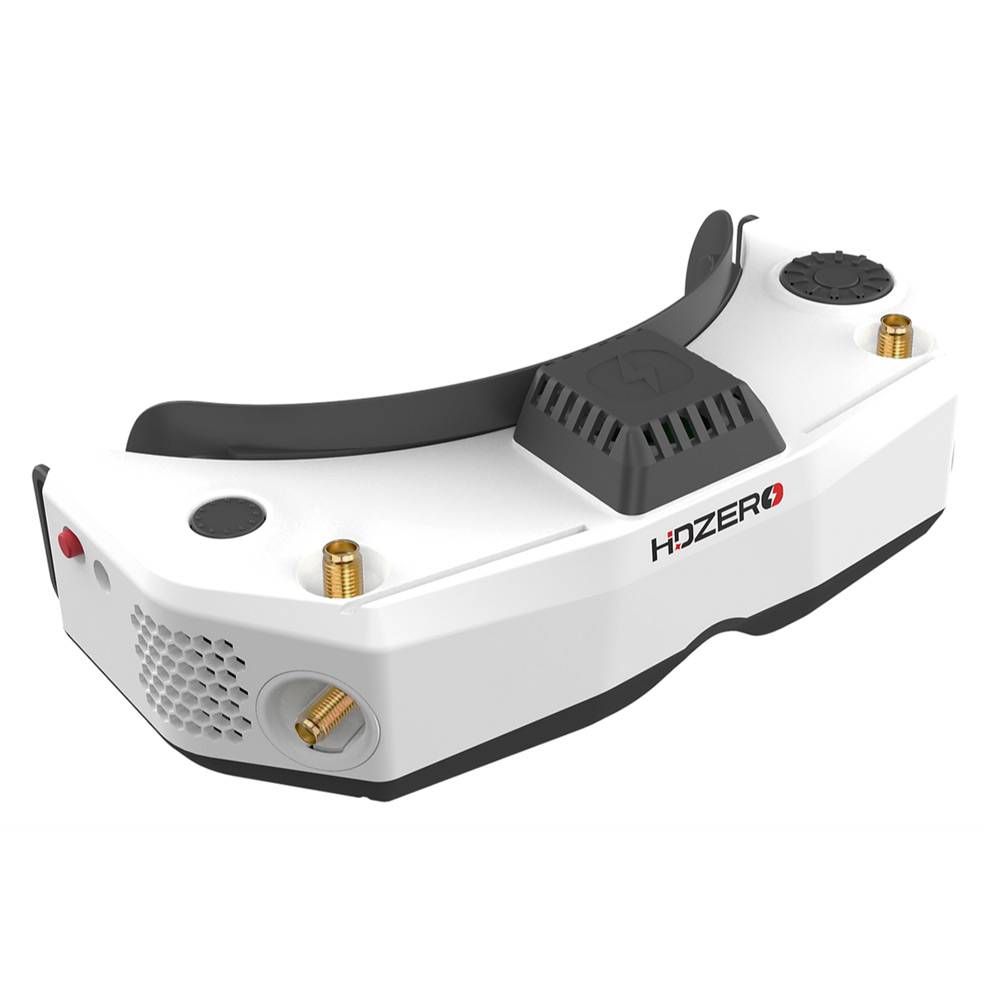
If you’re serious about racing, HDZero is the platform. The goggles have 90Hz screens (no other FPV system matches this), which delivers incredibly responsive, smooth video. The latency is lower than analog. The system is open-source, meaning it evolves fast with community input.
You can also plug an analog receiver module into these to fly analog too, which is a nice safety net.
The real talk: These are expensive—$600–$700. The image quality, while sharp, doesn’t blow away competing digital systems visually. You’re paying for racing performance, not cinematic looks. The ecosystem is smaller than DJI’s. But if you’re grinding gate races, it’s hard to beat.
Price: $600–$700
Best for: Racing pilots who want lowest latency and 90fps smoothness
Best Budget Digital Goggles
DJI Goggles Integra – Smart Budget Option

If DJI Goggles 3 is the premium choice, think of the Integra as “good enough but actually pretty smart.” At $350, it’s cheaper than the G3. You lose some diopter flexibility (you get interchangeable lens inserts instead of smooth adjustment), and the fixed antennas mean you can’t upgrade them. But here’s the thing: if you’re flying O4 air units, the Integra works great.
The built-in battery, OLED display, and core feature set are all still there. It’s the “I want DJI but my budget won’t stretch” answer.
Price: $350-500
Best for: Budget-conscious pilots wanting DJI quality
Best Analog FPV Goggles: The Proven Workhorses
Analog isn’t dead. Not even close. Lots of pilots prefer the simplicity, the lower cost, and the fact that you’re not locked into one brand’s ecosystem. Plus, analog is reliable—it’s been the standard for years.
Fat Shark HDO+ – Analog King

Fat Shark’s HDO+ is probably the best analog-only goggles still being made. We’re talking 1920×1080 OLED screens (same resolution as expensive digital goggles), 50-degree FOV, and adjustable focus from +2 to -6 diopters. Build quality is solid.
Here’s why pilots still buy these: they accept any analog receiver module you throw at them. Want to swap from RapidFIRE to TBS Fusion? Just plug it in. You’re not locked into anything.
The real talk: You need to buy a receiver module separately (usually $150–$200), which adds cost. And yeah, they’re around $700, which isn’t cheap. But the longevity and flexibility are unmatched in the analog space. Fat Shark’s customer service is also legitimately good if something breaks.
Price: $700–$800 (module not included)
Best for: Analog purists and long-term flyers
SkyZone SKY02O OLED – Best Value Analog

Real talk: the SKY02O might be the best “bang for buck” OLED analog goggles on the market right now, full stop. At $400-450, you get OLED screens, 640×480 resolution, a 29-degree FOV, and—this is huge—the RapidMix receiver module is built in. No extra cost for receiver.
Note that it has no adjustable diopter – which may be a show stopper for some people.
The real talk: SkyZone’s after-sales support doesn’t touch Fat Shark’s. But at this price point? You’re getting better than you should.
Price: $400–$450 (receiver included)
Best for: Pilots who want premium specs at a reasonable price
NEW for 2025: Box Goggles
Box goggles are making a real comeback. They’re not for everyone (some people find them bulky), but they’re getting better.
HDZero BoxPro – Digital + Analog in a Box

This just dropped in early 2025, and it’s genuinely interesting. For $349, you get a 100Hz LCD display (bright—1800 nits), built-in HDZero digital receiver, built-in analog receiver, and HDMI input. So you can fly digital HDZero, analog, or external HDMI all on the same goggles.
The 56-degree FOV is huge, and it comes with four antennas (two patch, two linear). Latency is tight. It’s basically the “grow with you” goggle—start with cheap analog tiny whoops, upgrade to HDZero racing, mix it up as you get deeper into the hobby.
The real talk: Box goggles feel heavier on your face. They’re not as compact as binocular-style goggles. If you have large glasses, they’ll be uncomfortable. But for pilots who want flexibility and don’t mind the form factor, it’s hard to beat for $349.
Price: $349-399 (Plus version)
Best for: Pilots wanting versatility across multiple systems
Best Receiver Modules (If You Need Them)
If you grab analog goggles without a built-in receiver (like the Fat Shark HDO+), you need a separate VRX module. Here are the best options:
TBS Fusion – Best Value Module
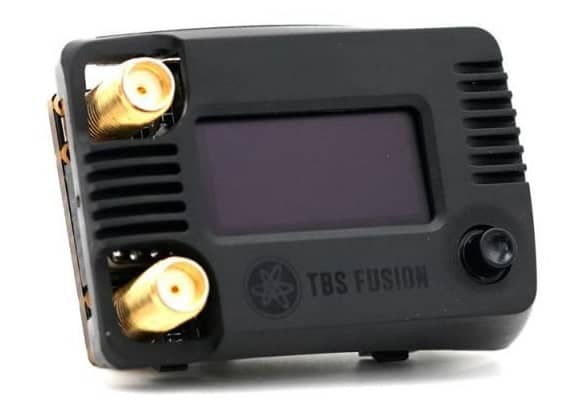
At $170, the TBS Fusion is the smart choice for most people. It matches the RapidFIRE’s performance in blind tests, integrates with TBS Crossfire systems (including automatic channel syncing), has WiFi for TBS Cloud connectivity, and costs about $40 less. The signal reception is solid—truly competitive at the high end.
Buy here: GetFPV | Team Blacksheep Official
ImmersionRC RapidFIRE – Proven Gold Standard

RapidFIRE is the module that’s been winning shootouts for years. It merges signals from two receivers to eliminate tearing and rolling. The diversity performance is legendary. At $190, it costs more than TBS Fusion, but it’s backed by years of real-world results.
HDZero VRX – For HDZero Goggles

If you’re flying HDZero, the HDZero VRX is your receiver. 720p, 60fps, low latency. It’s purpose-built for the system.
The Real Talk: How to Actually Choose
Here’s my honest framework for picking goggles:
Are you just starting out? Grab the HDZero BoxPro ($349). You get working goggles without dropping $500+. It lets you learn without huge financial risk. If you decide FPV isn’t for you, you’re not stuck with expensive gear.
Do you want the best image quality? DJI Goggles 3. Full stop. The 1080p OLED display, integrated battery, and ecosystem support are worth the money. You’ll look through these every flight for years.
Do you want to race? If it’s casual gate-flying, get the DJI. If it’s serious, HDZero Goggles. The 90Hz latency advantage matters at that level.
Do you want maximum flexibility and don’t mind box goggles? HDZero BoxPro. Fly anything, upgrade later, don’t get locked in.
Do you want analog and don’t care about the latest tech? SkyZone SKY02O OLED. Best specs at a fair price. The receiver module is already built in, which saves you $150–$200.
A Few Tips Before You Buy
If you wear glasses: Check the diopter adjustment range or lens compatibility. The DJI and HDZero both handle this well. Some goggles support corrective lens inserts.
Try before you buy if possible. Goggle fit is super personal. Some land on your face perfectly. Others dig into your forehead. If you can’t try them, buy from vendors with good return policies.
Receiver modules matter. Even good goggles feel mediocre with a cheap receiver. If you’re buying analog, budget for at least a TBS Fusion ($170) or RapidFIRE ($190).
Digital ecosystems are locked in. You pick DJI, Walksnail, or HDZero—you’re committed. That’s not bad, just reality. Pick the system where you’ll fly, not the fanciest marketing.
Final Thoughts
Your goggles are the most important piece of FPV gear you own. They’re literally between you and your view of the sky. Spending more doesn’t always mean better, but spending on the right choice for your style absolutely does.
Whether you grab budget analog goggles, digital flagship performance, or something in between, get something and start flying. You’ll learn what matters to you real quick once you’re in the air.