2026 Long Range FPV Drones Showdown: Who Will Reign Supreme?
Long range FPV lets you yeet a quad way out into the mountains, across valleys, or over the ocean and feel like you’re riding on the nose of a missile… without actually becoming the missile. As batteries, video systems, and radios keep getting better, the long range FPV scene in 2026 is honestly better than it’s ever been.
But more choice also means more confusion. DJI O4 vs analog vs Walksnail, sub‑250g vs 7″ cruisers, Li‑ion vs LiPo, ExpressLRS vs Crossfire… if you’re new to long range, it can feel like you need a PhD just to pick a BNF.
So in this updated guide, let’s walk through what “long range FPV” really means in 2026, how to choose the right size quad, and which current BNF drones are actually worth your money.
What Is a Long Range FPV Drone in 2026?
Long range FPV is a sub‑niche where you trade snap‑roll agility and crash‑proof frames for efficiency, stability, and battery endurance. Instead of ripping a bando, you’re trying to cover distance, explore, and get home safely.
Key traits of modern long range FPV drones
- GPS and return‑to‑home (RTH) – Non‑negotiable. If you’re flying kilometers away, you want GPS‑based RTH and a proper failsafe setup. Many long‑range‑oriented BNFs ship with GPS and RTH ready to configure out of the box.
- Efficient motors and larger props – 4″–7.5″ props with lower KV motors tuned for efficient cruising, not freestyle punchouts.
- Optimized video link – DJI O4 is currently the king for hassle‑free long range HD FPV, with excellent penetration and range. Analog can still out‑range everything if you really push power and antennas, but most people prefer the convenience and image quality of digital now.
- Li‑ion compatibility – Many long range builds are designed to run high‑capacity Li‑ion packs for endurance rather than high‑C LiPo packs for freestyle.
- Self‑powered buzzer / GPS beeper – Crash in the bushes 3 km away and you’ll be very happy you insisted on a self‑powered buzzer.
And as always: make sure you stay legal where you fly. Long range usually means high power and beyond visual line of sight (BVLOS), which is restricted or straight‑up banned in many places.
Which Size Long Range FPV Should You Buy?
“4 inch vs 5 inch vs 7 inch” used to be a simple budget ladder. In 2026, there’s a bit more nuance thanks to sub‑250g builds and smarter Li‑ion setups, but the basic logic is still similar.
4″ Micro Long Range (Sub‑250g & Travel‑Friendly)
4″ long range quads aim to squeeze real range out of a very small, light platform. Think mountain hiking, travel, or flying where local laws get friendlier under 250 g.
Pros:
- Can stay under 250 g with the right battery and camera setup.
- Easier to pack, travel with, and hike up a mountain.
- Surprisingly good flight times on 18650 or light 4S packs.
Cons:
- Struggles in high wind compared to 5″ and 7″.
- Limited payload – don’t expect to haul a full‑fat GoPro plus a brick of Li‑ion.
- Frames are lighter and usually less durable than big 5″/7″ tanks.
If you want “take everywhere” long range and you’re okay with a lighter, more cinematic style of flight, 4″ micro long range is the sweet spot.
5″ Long Range (Versatile Cruiser/Freestyle Hybrid)
5″ long range rigs sit in the middle. They share a lot of parts with standard 5″ freestyle builds but stretch the wheelbase, tweak motor KV, and add GPS to favor efficiency.
Pros:
- More stable in wind than 4″ while still being fairly compact.
- Can carry a full‑size GoPro or action cam with a reasonable battery.
- Can double as a “freerange” rig – some freestyle plus distance cruising.
Cons:
- Typically over 250 g in any realistic long range setup.
- Not as efficient or floaty as a properly tuned 7″ cruiser on Li‑ion.
If you want one quad that can do both freestyle and moderate long range, a 5″ long range rig is a solid all‑rounder.
7″ and Larger Long Range (Maximum Endurance & Payload)
7″–8″ builds are where long range gets serious: heavy batteries, big motors, and enough authority to ignore wind like it’s a gentle suggestion.
Pros:
- Long flight time – 15–25+ minutes is realistic with Li‑ion and efficient cruising.
- Very stable with a big image – perfect for cinematic, sweeping shots.
- Can carry heavier payloads (full GoPro, big GPS, even additional sensors).
Cons:
- Not great for tight freestyle – think “cruising glider”, not “park ripper”.
- Larger, heavier, and more expensive to crash and repair.
- Need more space and safer flying environments.
If you’re dreaming of deep mountain dives or long ocean‑side missions and you don’t mind carrying a bigger quad (and battery), 7″ is still the classic “best long range FPV” category.

Core Long Range FPV Concepts You Should Understand
Video System: DJI O4 vs Analog vs Others
In 2026, DJI’s O4 system basically owns the mainstream long‑range HD space. It offers excellent range and penetration, 4K recording, and rock‑solid link quality with minimal hassle.
- DJI O4 – Amazing penetration and range out of the box; O4 Pro goes up to 1200 mW with dual antennas and can easily do 10 km+ in the right conditions.
- Analog – Still unbeatable for extreme distances if you’re willing to run huge high‑gain antennas and high‑power VTX; more common on wings and custom builds than off‑the‑shelf quads now.
For most people itching to get into long range FPV drones in 2026, a BNF with DJI O4 is the easiest path.
Radio Link: ExpressLRS vs Crossfire
For radio control, the two main players are still:
- ExpressLRS (ELRS) – Open‑source, insanely flexible packet rates, and great range. 2.4 GHz is the most popular, but 900 MHz is ideal if you really care about range and penetration.
- TBS Crossfire – The old king of long range; still extremely reliable and well supported, especially at 900 MHz, even if ELRS has overtaken it in features and raw performance.
Both have more than enough range for sane long‑range quads. Just make sure your BNF lists either ELRS or Crossfire (CRSF) as a radio option.
Li‑ion vs LiPo for Long Range
Li‑ion packs are where the magic long flight times come from. They don’t deliver the same burst current as a high‑C LiPo, but they carry significantly more energy for the same weight.
- LiPo – Better for punchouts, freestyle, and aggressive flying. Flight times are shorter but the quad feels more “alive”.
- Li‑ion – Ideal for smooth cruising and big distances. Expect 15–30 minutes of usable flight time on efficient long range setups when tuned and flown correctly.
This is why a lot of pilots keep both: LiPo for fun, Li‑ion for missions.
Best 7″ Long Range FPV Drones in 2026
Let’s start with the “go big or go home” category. If you’re here for maximum range, 7″ is still where the most serious long range FPV drones live.
GEPRC MOZ7 V2 (DJI O4 Pro Long Range Beast)
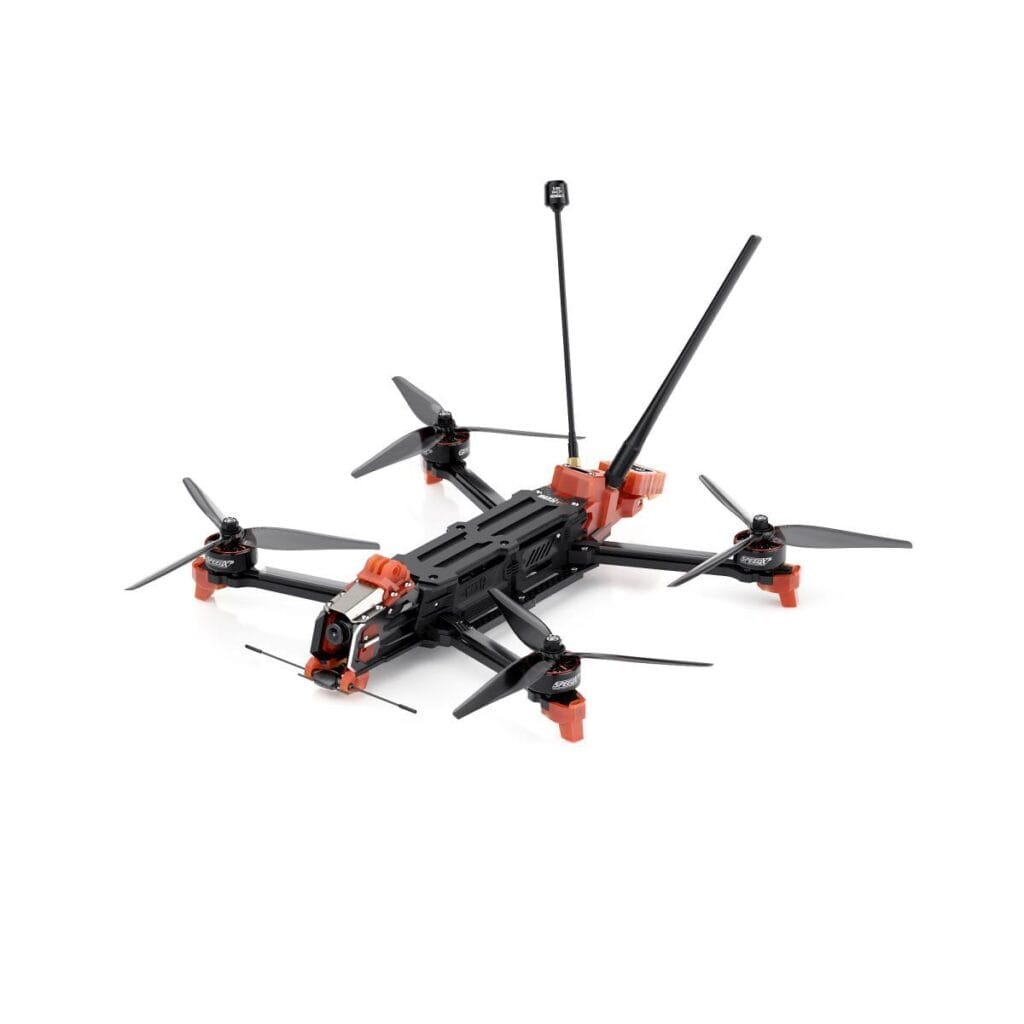
The GEPRC MOZ7 V2 is one of the most complete 7.5″ long range drones you can buy right now. It’s built specifically around the DJI O4 Pro Air Unit, 7.5″ props, and big 6S packs.
Why it’s great for long range FPV:
- 7.5″ props with upgraded 2809‑1450 KV motors for efficient long‑range cruising.
- DJI O4 Pro with 4K/120 recording and excellent HD link quality.
- Reinforced frame with aluminum camera cage and integrated landing/arm guards for durability in rough terrain.
- GemX dual‑band ELRS receiver option (915 MHz/2.4 GHz) aimed directly at long range pilots.
- Flight‑tested 15–20+ minute flight times on 6S Li‑ion packs at efficient cruise speeds.
What real pilots say: Reviews consistently highlight how stable it feels in wind, how well it handles heavy batteries and GoPros, and how refined the stock tune is for long‑range cruising, even if it’s a bit heavier than the spec sheet suggests.
SpeedyBee Mario Fold 8 (Foldable 8″ Travel Long Ranger)
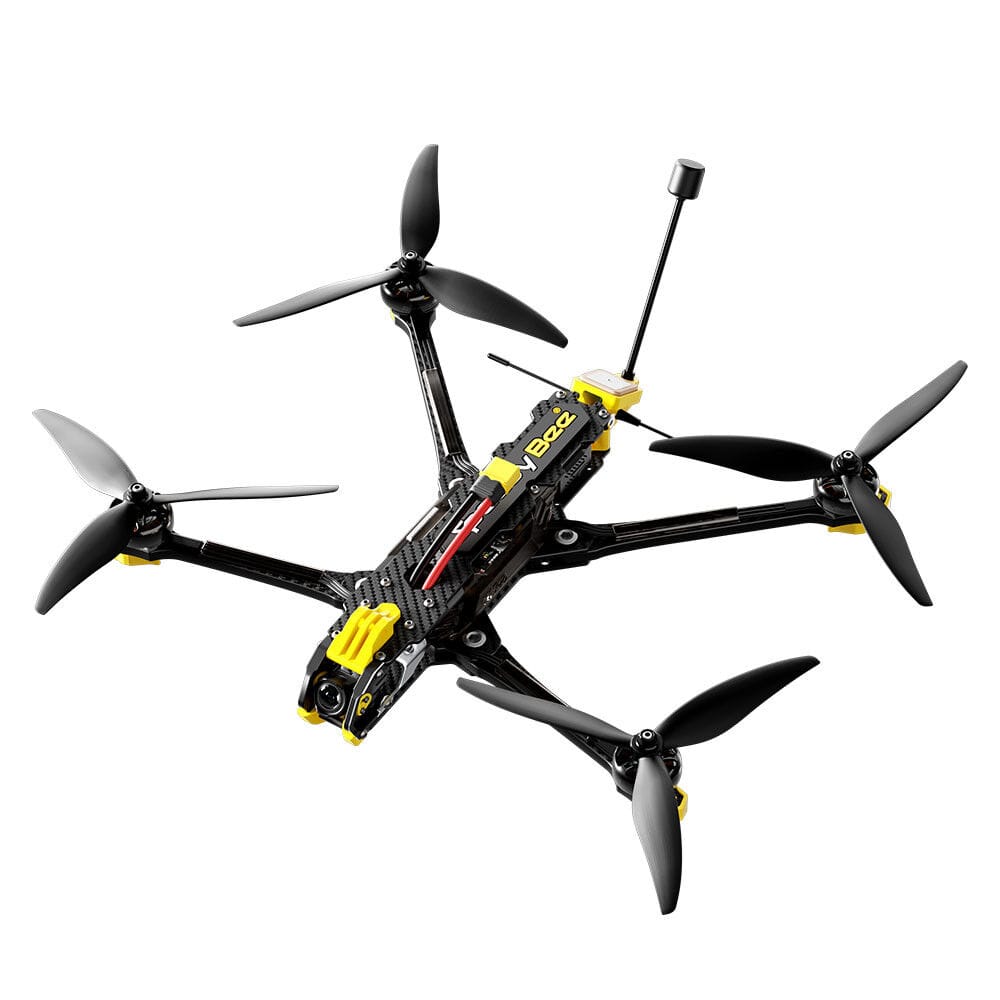
If you want ridiculous range but also need your quad to actually fit in a backpack, the SpeedyBee Mario Fold 8 is a very clever option. It’s an 8″ foldable long range frame that’s built specifically for portability and endurance.
Why it’s great for long range FPV:
- Supports 7–8″ props with a strong, foldable 7 mm‑arm frame.
- Deadcat layout to keep props out of view for clean cinematic footage.
- Designed around big Li‑ion packs (e.g. 6S2P) for long flights.
- Supports multiple FC and VTX formats, including DJI O3/O4, so you can build it exactly how you like.
What real pilots say: Pilots praise the build quality, stiffness, and how well the folding mechanism holds up in actual use. It’s heavier and more complex than a simple 7″ frame, but if you want maximum range and travel‑friendliness, that tradeoff is worth it.
At the time of writing, this is more commonly sold as a frame. If you want this exact style of 8″ long range quad, be prepared to build or transplant electronics into the frame.
Best 4″ Micro Long Range FPV Drones (Sub‑250g & Travel)
If your idea of long range FPV is hiking for an hour, pulling a tiny quad out of a backpack, and flying around a mountain ridge without raising too many eyebrows, the modern 4″ micro long range class is your friend.
Flywoo Explorer LR 4 O4 Pro (Sub‑250g O4 Long Range)
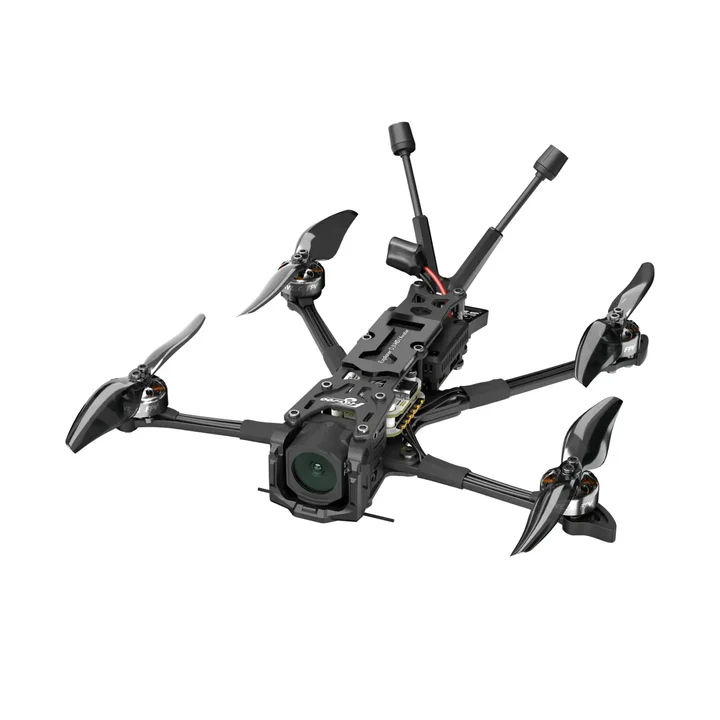
The Flywoo Explorer LR 4 has been a long‑range classic for years, and it’s been updated for 2025/2026 with DJI O4 Pro support while still keeping the focus on sub‑250g long range performance.
Why it’s great for long range FPV:
- Sub‑250g capable 4″ deadcat frame designed specifically for micro long range.
- Supports DJI O4 Pro for modern long‑range HD with excellent penetration.
- Designed to run 18650 Li‑ion or light 4S packs, with real‑world reports of 15+ minutes flight time when cruising.
- Self‑powered buzzer and GPS options make it practical for actual long range missions.
What real pilots say: Pilots have been using Explorer LR 4 variants for years and still recommend it as one of the best micro long range platforms – not because it’s flashy, but because it simply works. It isn’t the toughest or most acrobatic quad, but for 2–5 km exploration and travel flying, it’s hard to beat.
NewBeeDrone LionBee 1S 3″ Long Range (Ultra‑Light Endurance Nerd Toy)
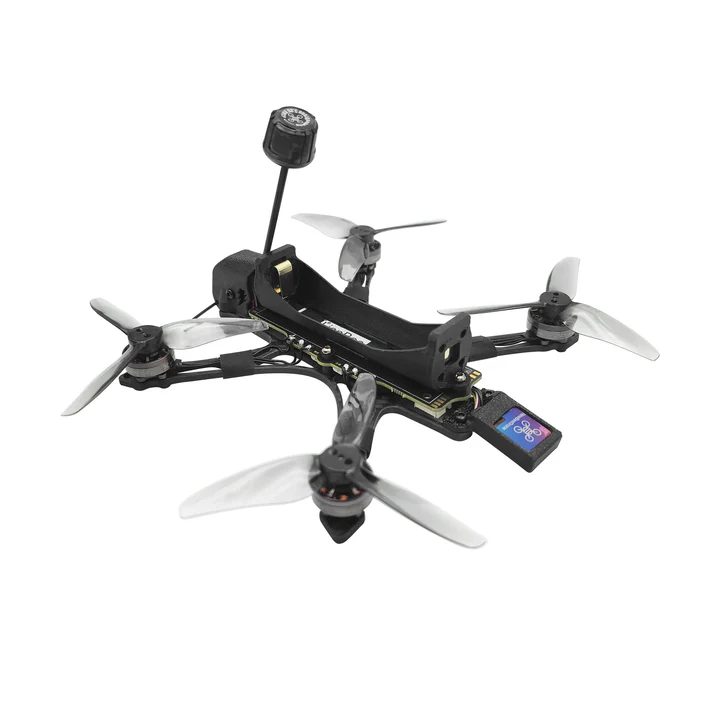
If you want to go full nerd and see how far a single 18650 cell can take you, the NewBeeDrone LionBee 3″ long range platform is one of the most interesting micro long range designs in 2026.
Why it’s great (and weird) for long range FPV:
- 1S 3″ platform designed around a structural 18650 “battery chamber” – the pack is part of the frame for stiffness and efficiency.
- Custom 32‑bit 1S ESC, integrated ExpressLRS receiver, and up to 800 mW VTX on some kits for surprising range on a tiny rig.
- Tested hover times around 20 minutes and real‑world flight times ~15 minutes on a single high‑performance 18650 cell.
- Perfect for ultra‑light exploration and experimenting with low‑power long range concepts.
What real pilots say: This is not the quad you buy as your first and only long range FPV drone. It’s more of a “second or third long range toy” if you already love endurance flying and want to push what 1S can do. That said, reviews highlight how refined the design is and how surprisingly capable it is for its size.
How to Choose the Best Long Range FPV Drone for You
Let’s simplify the decision based on how you actually plan to fly.
“I want maximum range, stable video, and big cinematic shots.”
Go for a 7″ long range FPV drone like the GEPRC MOZ7 V2 O4 Pro. Pair it with 6S Li‑ion packs and you’ll have a very capable long range platform that can handle wind and haul a proper action camera.
Good next steps:
- Make sure your radio supports ExpressLRS or Crossfire.
- Learn how to configure GPS RTH and failsafe correctly in Betaflight or iNAV.
- Practice emergency procedures on a closer, smaller quad before sending a 7″ out over the ocean.
“I travel a lot and need something light and less intimidating.”
Look at the Flywoo Explorer LR 4 O4 Pro Sub250. You still get real long‑range FPV capability with DJI O4, but in a package that won’t break your back on a hike and can be kept under 250 g with the right pack.
Also a very good platform to start learning long range basics like battery management, GPS setup, and link budgeting.
“I’m a nerd and want to experiment with ultra‑light endurance.”
The NewBeeDrone LionBee 3″ long range platform is a fun way to dive into 1S endurance builds, 18650 tuning, and micro long range experimentation. Not a first‐quad recommendation, but a fantastic “advanced side quest”.
Practical Tips for Long Range FPV Success
1. Set up a reliable radio and video link
- Choose ELRS or Crossfire and stick with it across your fleet for familiarity.
- On DJI O4/O3, make sure you understand power settings and, if legal, FCC unlocking to avoid being stuck at 25 mW.
- Use proper directional antennas or high‑gain patches at your goggles if you’re going to push distance.
2. Tune your expectations (and your throttle)
- True “long range” is as much about flying gently at 30–40% throttle as it is about hardware.
- With Li‑ion, punchouts will sag the pack hard and destroy your flight time. Think glider, not rocket.
3. Don’t skip GPS and failsafe testing
- Test RTH locally before you send the quad 3 km away.
- Set conservative battery warnings and reserve enough voltage for the return trip.
- Add a self‑powered buzzer on anything that might end up lost in tall grass.
4. Build your skills in steps
- Start with shorter “long range” flights – 500 m, then 1 km, then 2 km.
- Keep line of sight as much as possible and be picky about your flying spots.
- Use a cheaper quad to practice before risking an expensive 7″ rig.
If you’re brand new to FPV in general, consider starting with a beginner guide and a more forgiving 5″ or whoop before going straight to long range.
Conclusion: Which 2026 Long Range FPV Drone Reigns Supreme?
There’s no single “best long range FPV drone” for everyone – it depends on where you fly, how far you really need to go, and how much gear you’re willing to carry.
- For serious long range and maximum capability, the GEPRC MOZ7 V2 O4 Pro is hard to beat in 2026 – stable, powerful, feature‑packed, and backed by plenty of real‑world testing.
- For sub‑250g travel long range, the Flywoo Explorer LR 4 O4 Pro remains one of the most practical choices – light, efficient, and now updated for DJI O4.
- For ultra‑light endurance experimentation, the NewBeeDrone LionBee 3″ offers a glimpse into the future of micro long range.
Pick the class that fits your flying style, get your radio and video links sorted, and ease your way into longer flights. Long range FPV is one of the most rewarding corners of the hobby – just respect the distance, respect the regulations, and always leave enough battery to get home.